

C A T
A L O G
Sciences
Ravi Bhushan and Juergen Martens
Antioxidant Vitamins and Health: Cardiovascular
Disease, Cancer, Cataracts, and Aging
Claude Fernand Bourgeois
Capillary Electrochromatography and Pressurized Flow
Capillary Electrochromatography: An Introduction
Ira S. Krull, Robert L.
Stevenson, and Kavita Mistry, with Michael E. Swartz
Contemporary Microscale Separation Technology
Chao Yan
Drug Development Perspectives: Strategies,
Challenges, and Considerations
Nuggehally Srinivas
Electroanalytical
Methods in Pharmaceutical Analysis and Their Validation
Sibel A. Ozkan
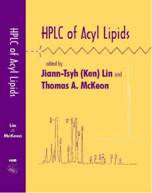
HPLC
of Acyl Lipids
edited
by Jiann-Tsyh Lin and Thomas A. McKeon
Microthermal Field-Flow Fractionation
Josef
Janča
Okra Handbook: Global Production, Processing, and Crop
Improvement
edited by B. S. Dhankhar and Ram Singh
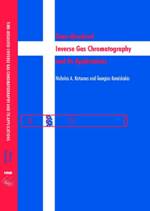
Time-Resolved Inverse Gas Chromatography and Its
Practical Applications
Nicholas
A. Katsanos and George Karaiskakis
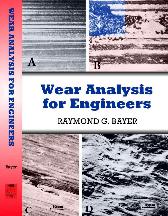
Wear Analysis for Engineers
Raymond
G. Bayer
|
|
Amino Acids: |
|||||
|
Ravi Bhushan and Juergen Martens |
||||||
|
$99.75 |
March 2010 |
|||||
|
Illustrated: |
|
|
|
|||
Description
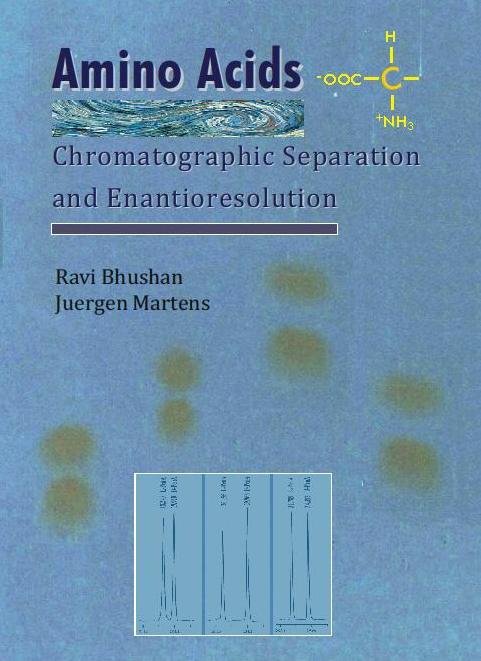
Amino acids are important
biological compounds that are associated with peptides and proteins, and occupy
an important position in the food and pharmaceutical industries. With their
simple structures and the ready availability of both enantiomers, amino acids
not only serve as a chiral pool for synthesis but also provide an inexpensive
pool for resolution studies as either the racemate for resolution or the chiral
selector for resolution of racemic mixtures of several other compounds. The
development of analytical methods that can be applied for separation and
identification and resolution of enantiomers of chiral compounds, including the
control of optical purity, remains an area of interest and importance.
Contents | Preface | About the Authors
HOME | CONTACT US
Add me to mailing list

Description
Antioxidant Vitamins and Health is about the role played by antioxidant nutrients in the
prevention of chronic degenerative diseases and conditions. The book begins with
some background on free radicals, the reactive oxygen species generated in
vivo, then describes the mechanism of antioxidation and the antioxidant
defenses of humans. Each of the succeeding chapters covers a main topic:
cardiovascular disease, cancer, cataracts, and aging. The most important
epidemiological studies carried out over the past two decades are thoroughly
discussed and compared. The results are summarized in a concluding chapter, and
an extensive list of references is provided.
The book will appeal to researchers in the fields of
antioxidants, cardiovascular disease, cancer, cataracts, and aging; nutritional
scientists; and students in these disciplines.
Contents | Preface | About the Author
HOME | CONTACT US
Add me to mailing list
Description
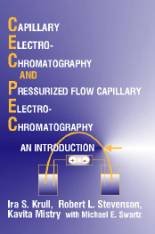
This book covers the theory, instrumentation, and specific
uses and applications, including advantages and limitations, of capillary
electrochromatography (CEC) and pressurized flow CEC (PEC). In so doing, it
compares CEC/PEC with more conventional modes of separation and discusses
method transfer from other chromatographic techniques to CEC.
Aimed at those first approaching applications in CEC/PEC,
the book is an invaluable introduction for analytical chemists involved in
methods development, optimization, and validation for any analytes already
undergoing analysis by chromatographic or electrophoretic techniques, including
analytical chemists, analytical biochemists, molecular biologists,
immunologists, pharmaceutical scientists, medicinal chemists, pharmacists,
environmental chemists, and industrial chemists.
Contents | Preface | About the Author
HOME | CONTACT US
Add me to mailing list
|
|
||||
|
Chao Yan |
||||
|
$99.75 |
June 2013 |
|||
|
Illustrated: |
|
|||

Description
Microscale separations offer fast separation and analysis with high efficiency, resolution, and selectivity; in addition, solvent and sample consumption are 10,000 times lower than with HPLC. This book reviews the most popular microscale chromatographic and electrokinetic separation techniques, including capillary electrophoresis (CE), capillary electrochromatography (CEC), pressurized CEC (pCEC), micellar electrokinetic chromatography (MEKC), capillary isoelectric focusing (CIEF), capillary gel electrophoresis (CGE), capillary isotachophoresis (CITP), and capillary liquid chroma-tography (CLC), as well as microchip-based LC and multidimensional capillary separations. Theory, instrumentation, and applications of these techniques are covered. This book will help professional chemists and graduate students develop new methods and improve existing methods for analyzing complex samples in the pharmaceutical, biological, environmental, and chemical fields.
Contents | Preface |
About the Author HOME | CONTACT US Drug Development Perspectives: Nuggehally R. Srinivas $99.75 July 2010 Illustrated: Description In present-day drug development, alignment of functional expertise is important
for understanding, strategizing, and operationalizing drug development
initiatives. The lessons learned from a drug development cycle can contribute
immensely to the overall understanding of drug development. In-depth case
histories and outside-the-box thinking can help formulate pragmatic approaches
in approaching some commonly occurring developmental issues. Contents | Preface |
About the Author HOME | CONTACT US Illustrated: Electroanalytical
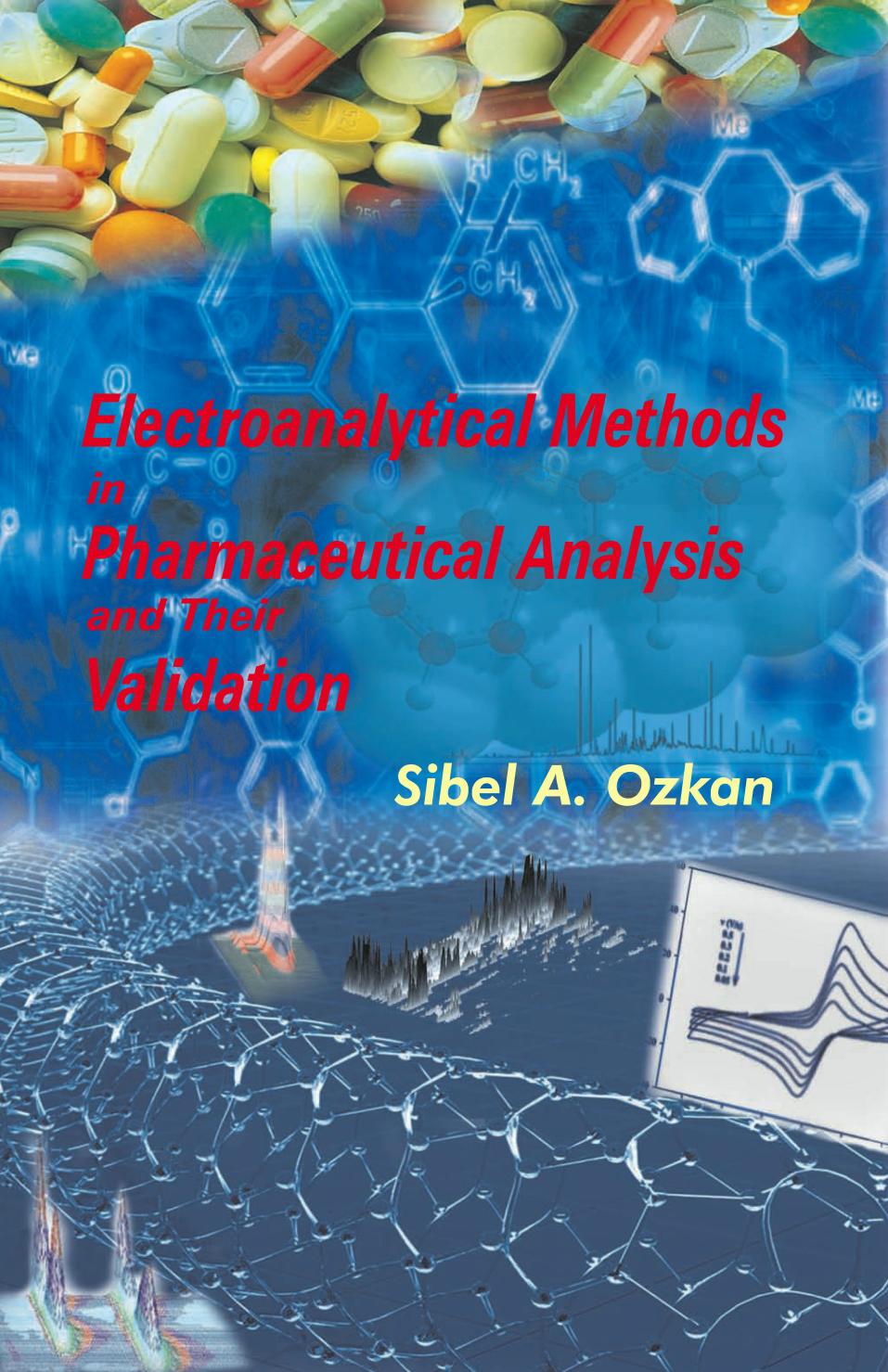
Methods in Pharmaceutical Analysis and Their Validation Sibel A. Ozkan $99.75 October 2011 Description With their high sensitivity and appropriateness for
measuring redox reactions, electroanalytical methods are ideal for
pharmaceutical analysis. This book focuses on the selection, use, and
validation of electroanalytical methods for pharmaceutically active compounds,
covering the most widely used electroanalytical methods and instrumentation.
Specific applications are provided and organized in extensively referenced
tales. A long concluding chapter on validation discusses method development, the
necessary parameters, and their calculation. This book will be of considerable
interest to pharmaceutical and analytical research chemists in not only the
pharmaceutical industry, but also in R&D, food, environmental, and
regulatory laboratories, as well as to post-graduate students in these
disciplines. Contents | Preface |
About the Author HOME | CONTACT US HPLC of Acyl Lipids Edited by Jiann-Tsyh Lin and Thomas A.
McKeon $99.75 April 2005 Illustrated: Description Lipids are of obvious
importance in medicine, health, industry, agriculture, and biotechnology. Fatty
acids can be separated by GC; however, fatty acid-derived complicated lipids
cannot be separated well by GC. HPLC is the separation technique of choice. This
book covers every class of lipids and HPLC techniques, with a concentration on
fatty acid-derived lipids. Contents | Preface | About the Editors HOME | CONTACT US Description Microthermal field-flow fractionation
(micro-TFFF) is a new method of polymer and particle separation and analysis
based on the effect of thermal diffusion (Ludwig-Soret effect); the
relationships between molecular characteristics of the separated macromolecular
and particulate species such as molar mass, particle size, chemical nature, and
composition; and their distribution and separation characteristics such as
retention. The book begins with a description of the theoretical principles of
FFF, which apply equally to micro-TFFF, although the latter technique offers a
number of important operational advantages, including superior cold-wall
temperature regulation. Practical analytical aspects of experimental data
analysis are discussed in detail. Typical methodological applications of
micro-TFFF are given for polymers and particles of synthetic, natural, or
biological origin. The book will be of interest to university and R&D
scientists involved in the analysis and characterization of polymers,
biopolymers, particles, and biological cells in polymer chemistry, colloid and
interface science, microbiology, and the environmental sciences. Contents | Preface | About the Author HOME | CONTACT US Okra Handbook: Edited by B. S. Dhankhar and Ram Singh $79.95 August 2009 Illustrated: Description Okra's potential as an oilseed
crop and its drought tolerance in a world facing global warming underscore its
growing importance. Yet, there has been no book exclusively on okra. This book
synthesizes the scientific information on various aspects of okra by global
experts in their fields of specialization to provide a single source of
in-depth and detailed information. Contents | Preface | About the Editors HOME | CONTACT US Illustrated: Time-Resolved Inverse Gas
Chromatography and Its Applications Nicholas A. Katsanos and George
Karaiskakis $55.00 June 2004 CATALOG "An excellent
reference for time-resolved inverse gas chromatography. It is definitely
worth its modest price." "An excellent
discussion of the theory and practice of inverse gas chromatography. It is
wholeheartedly recommended to everybody involved in the non-analytical use of
GC." "Each chapter is
clear, concise, and supported with numerous references." Description This book provides an easy
way to use time-resolved chemistry, allowing inverse gas chromatography to
become time resolved and therefore to record local with respect to time
adsorption energies, local monolayer capacities local isotherms, energy
distribution functions, adsorption rates with lateral molecular interactions,
surface diffusion coefficients, effectiveness factors in heterogeneous
catalysis, and surface energy on heterogeneous surfaces of solids. Important
practical applications of time-resolved inverse gas chromatography in various
scientific and industrial fields are included. The book will appeal to
chromatographers, materials scientists, and investigators of heterogeneous catalysis
and interfacial science, as well as researchers and postgraduate students in
analytical and environmental chemistry. Contents | Preface | About the Authors HOME | CONTACT US Raymond G. Bayer $99.75 2002 Illustrated: "Compressed
product-development cycles and tight budgets often prohibit extensive life
testing. Herein lies the value of Raymond Bayer's concise Wear Analysis
for Engineers, which provides a methodology for effective use of
equations and models to evaluate wear behavior. . . Bayer's years of
experience are revealed in the way he guides the reader through the process
of identifying the key factors for different wear scenarios. . . . Plenty of
figures, tables, and optical micrographs are provided, which makes for an
interesting and easy-to-follow text. . . . Wear Analysis for Engineers
is a useful tool for anyone attempting to resolve wear problems." Description This book guides engineers
on the proper analysis of wear situations and the utilization of qualitative
and quantitative methods to identify solutions to wear problems. The emphasis
is on how to do a successful wear analysis. With its clear descriptions,
helpful photographs, and insightful case histories, this book thoroughly covers
the recommended techniques for performing analyses. This is a book that all
practicing hardware or materials engineers concerned with the wear of
mechanical components will want to own. Contents | Preface | About the Author HOME | CONTACT US HNB Publishing
Add me to mailing list
Considerations, Challenges, and Strategies
Discounts on bulk purchases
328 pp.
ISBN: 978-0-9664286-9-8
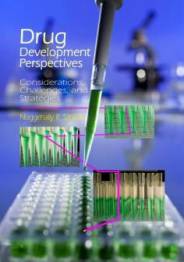
To better appreciate the complexities and intricacies of drug development,
different functions involved in the drug development process are presented as
unique chapters. Topics include bioanalysis, allometry, CYP metabolism, PK
simulations, combinations of diverse clinical pharmacology, and PK
considerations, with an emphasis on genetic polymorphism.
The book is intended for a wide range of scientists in late drug discovery,
preclinical, and clinical stages of drug development in pharmaceutical and
biotech industries, and for university and academic researchers.
Add me to mailing list
ISBN: 978-0-9664286-7-4
Discounts on bulk purchases.
350 pp.
Add me to mailing list
Discounts on bulk purchases.
572 pp.
ISBN: 0-9728061-1-3
Add me to mailing list
Add me to mailing list

Global Production, Processing, and Crop Improvement
Discounts on bulk purchases.
475 pp.
ISBN: 0-9728061-8-0
Add me to mailing list
ISBN: 0-9728061-0-5
Discounts on bulk purchases.
180 pp.
HOME | CONTACT US
Add me to mailing list
--Biomedical Chromatography
--Chromatographia
--Colloid and Interface
Science
Add me to mailing list
Discounts on bulk purchases.
360 pp.
ISBN: 0-9664286-5-X
--Tribology Letters
"While the author's approach shares many key attributes with others,
it represents a unique perspective gained after 40 years of experience in the
field of tribology. The approach he provides is sufficiently general to cover
a wide range of wear problems. . . . A useful book. . . . The author has
considerable wisdom to share, and if one devotes sufficient time to studying
the examples in this book, he or she will gain valuable, practical tools for
solving real wear problems."
--Journal of Testing and Evaluation, 30(5), September 2002
"This is a highly recommended work, as a very useful volume not only for
tribologists who are actually preoccupied with responses to wear problems,
but also for engineers working on machine design, and students who study
mechanical or materials engineering."
--Journal of Japanese Society of Tribologists
"[T]he experienced tribologist will probably find that it is a good
resource and the methodology described in the book is certainly valid in most
cases."
--Industrial Lubrication and Tribology
Add me to mailing list

sales@hnbpub.com